Roussillon
The key distinction is between dry wine and vin doux naturel, whose fermentation is stopped by adding alcohol.
To get started
Côtes du Roussillon, Collioure and Maury sec offer dry wines. Banyuls, Maury, Rivesaltes and Muscat de Rivesaltes lead to vins doux naturels. Check the full name: Maury and Maury sec are different styles.
Key grapes
Grenache: Red fruit and roundness in many blends. Compare a varietal Grenache with a blend: its generous fruit can be balanced by more structured grapes.
Syrah / Shiraz: Dark fruit, pepper and generous expression. Look for pepper and dark fruit, then compare a cooler expression with a riper one: climate and ripeness change the balance.
Mourvèdre: A warm-climate grape bringing structure and dark fruit to blends. Compare a young blend and a more mature bottle with a slow-cooked dish.
Carignan: A Mediterranean grape found in Languedoc and Roussillon reds. For comparison, choose two wines with a stated Carignan proportion.
Compare regions
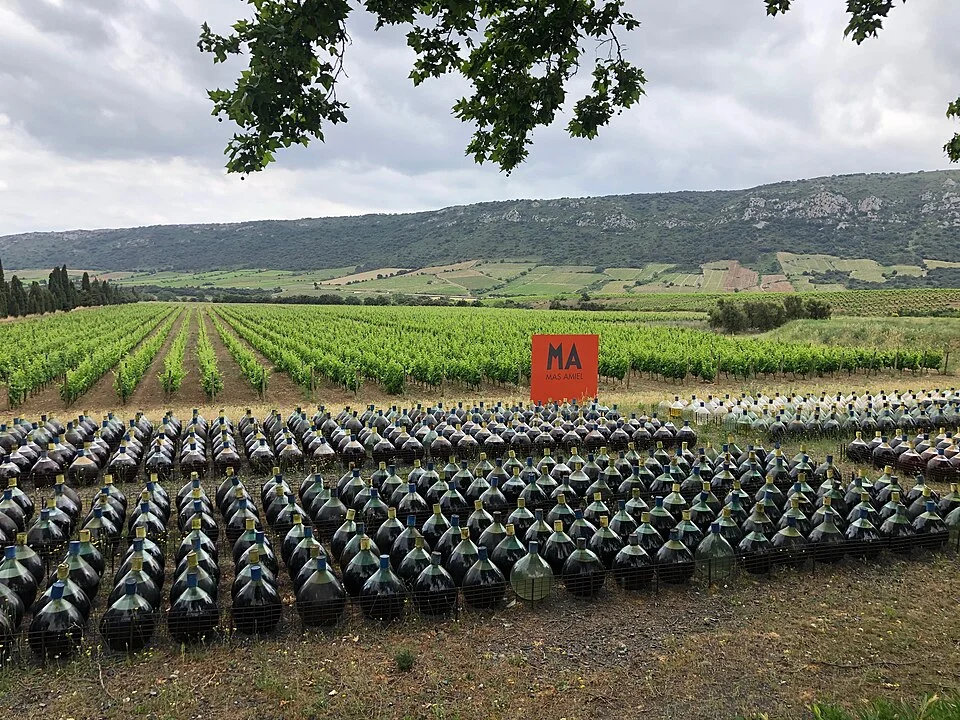
Reading Maury labels. Maury sec is a dry red. When comparing the appellation’s vins doux naturels, look for the ageing style. Grenat and blanc are aged in a low-oxygen environment, while tuilé and ambré are aged oxidatively. Compare two sweet wines of the same colour to explore the effect of ageing. Maury appellation producers’ association ↗.
Style descriptions are guides, not rules: vintage, vineyard, blending and maturation change the result.
Two routes to understand styles
Maury dry
Maury vin sweet naturel
Read the full designation before pairing: Maury alone does not establish sweetness. Vins doux naturels involve fortification and deserve a separate serving exercise.