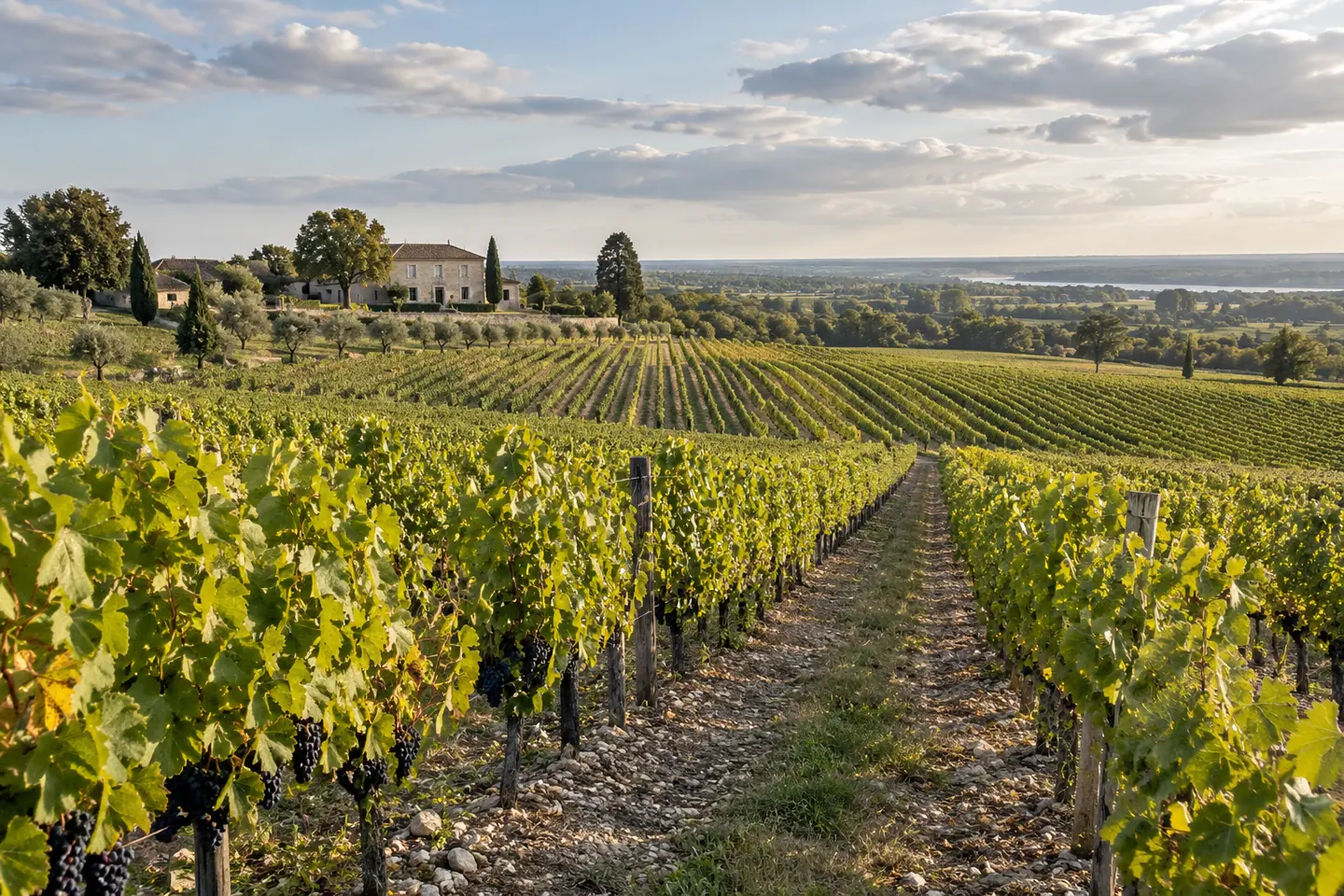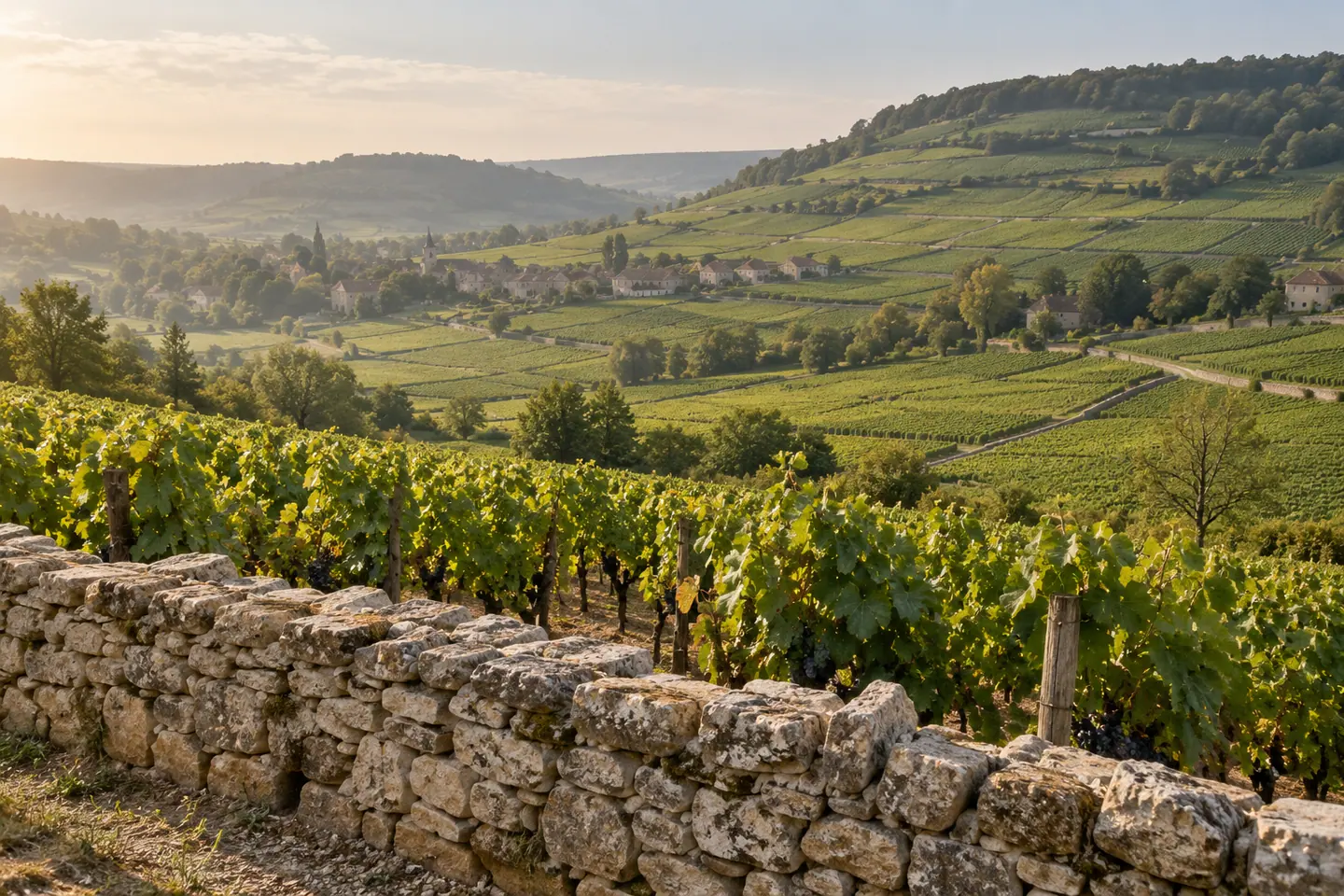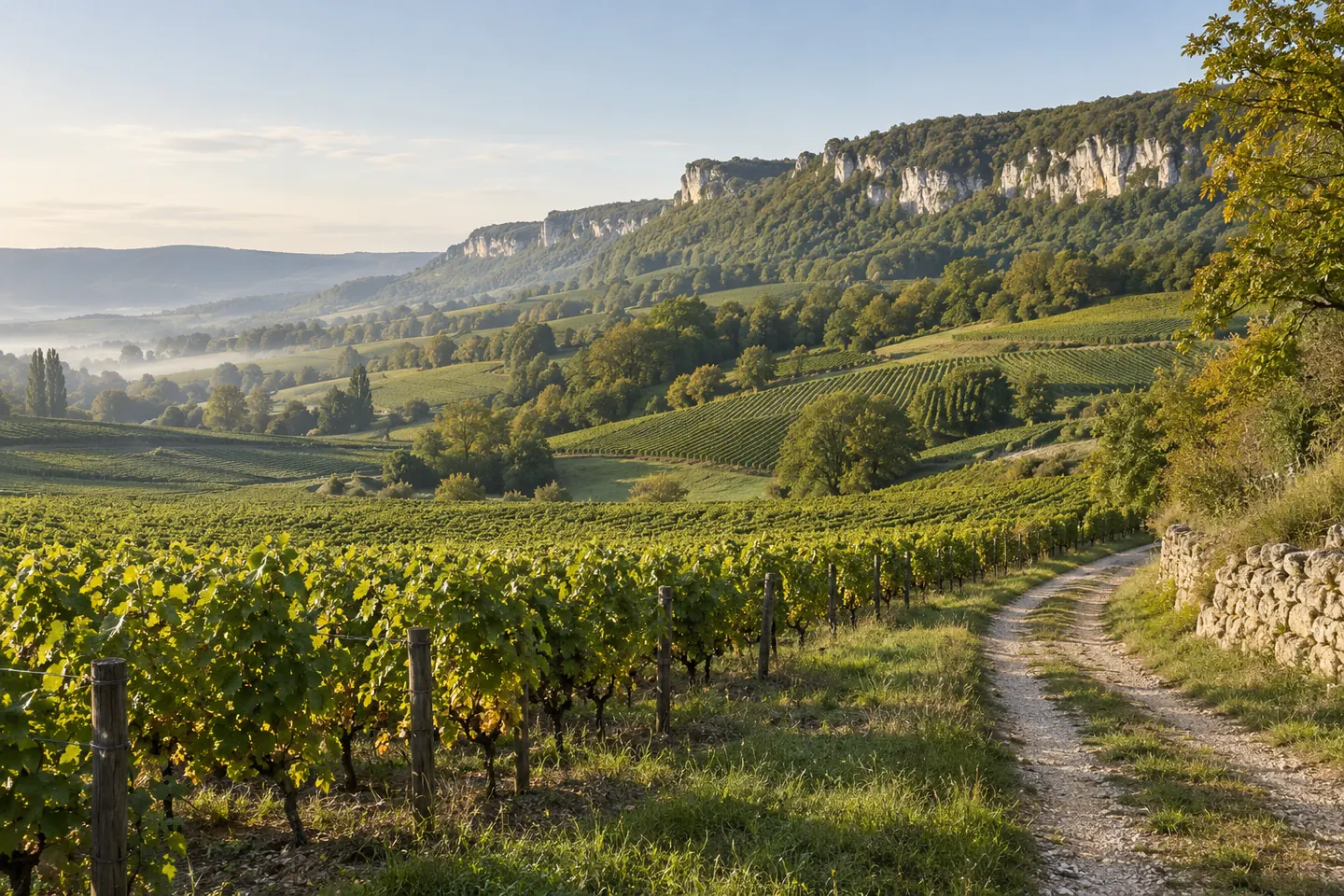
Jura
Arbois, Côtes du Jura, L’Étoile and Château-Chalon locate wines; vin jaune and vin de paille are different wine types.
To get started
Start with topped-up Chardonnay or Savagnin, then explore a white under a yeast veil. Vin jaune is dry despite its golden colour; vin de paille uses dried grapes. The region also makes Poulsard, Trousseau and Pinot Noir reds and Crémant du Jura.
Key grapes
Savagnin — The Jura white grape, made topped-up or aged under a yeast veil. Compare a topped-up Savagnin and vin jaune with mature Comté.
Chardonnay — From crisp and mineral to broad and buttery. Compare an unoaked version with a barrel-aged one: the grape stays the same, while fermentation and ageing change texture.
Pinot Noir — Finesse, red fruit and a clear sense of place. Serve it slightly cool and watch its perfume open in the glass; too much warmth accentuates alcohol.
Poulsard — A Jura red grape whose pale colour does not sum up its character. Compare Poulsard and Jura Pinot Noir at similar temperatures, separating colour and tannins.
Trousseau — A Jura red grape to compare with Poulsard and Pinot Noir. Compare Trousseau and Poulsard from one vintage with roast poultry, then alone.
Compare regions
Compare regions in the same country too: the same grape can produce different wines as climate, site and producer choices change.
Style descriptions are guides, not rules: vintage, vineyard, blending and maturation change the result.