Bordeaux
Cabernet Sauvignon leads on the Left Bank, Merlot on the Right; styles range from approachable bottles to ageworthy wines.
Terroirs, appellations and label clues
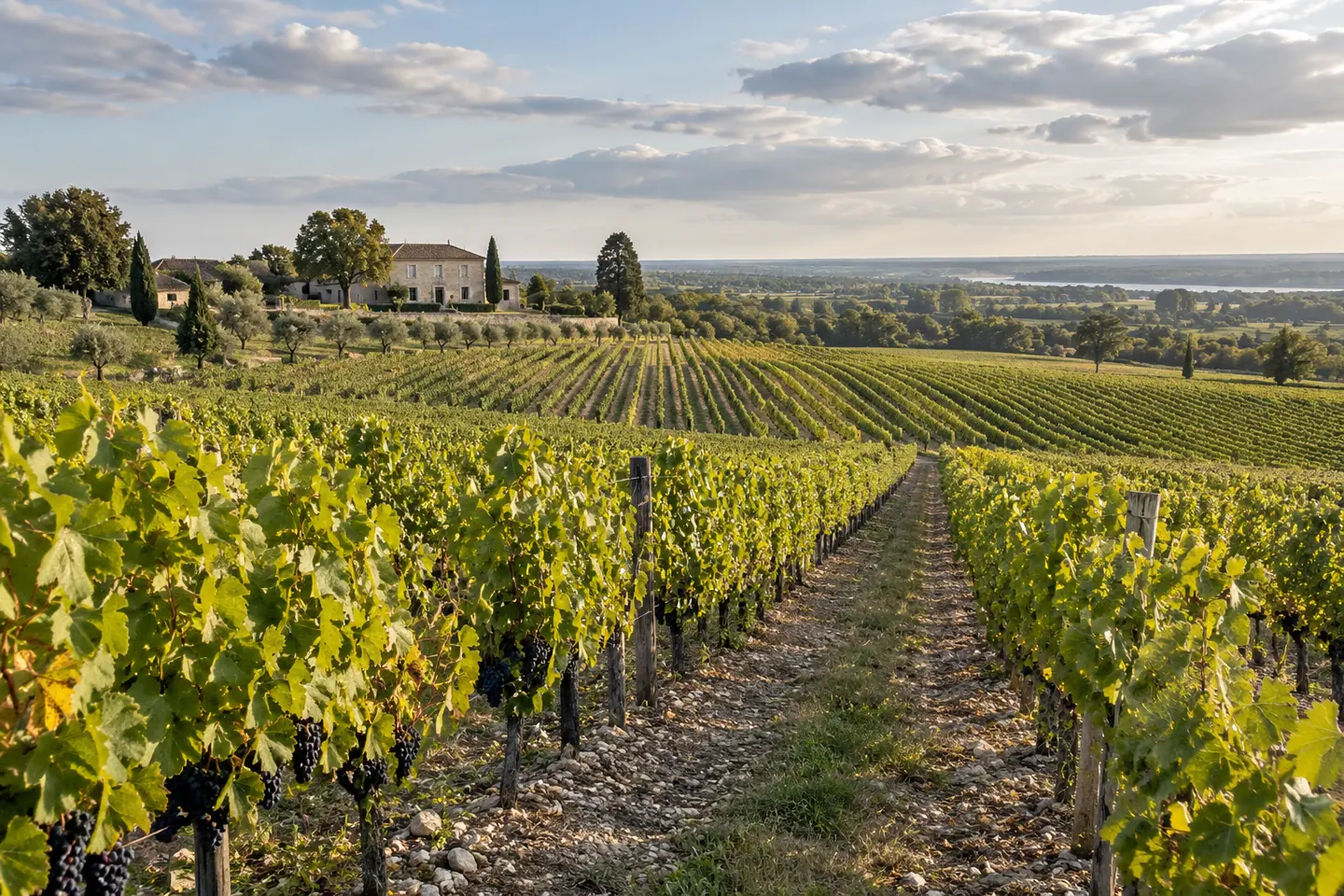
Médoc and Graves are on the left bank; Saint-Émilion and Pomerol on the right. Cabernet Sauvignon often leads in Médoc, Merlot on the right bank. Bordeaux also makes dry and sweet whites: Sauternes requires a different comparison from a Médoc red.
To get started
Compare a Cabernet Sauvignon-led blend with one led by Merlot: texture can change as much as fruit character.
Key grapes
Cabernet Sauvignon — Structure, blackcurrant and ageing potential. Compare a young Cabernet with a mature one: tannins soften while fruit aromas can evolve.
Merlot — Plum, softness and roundness. Notice texture as well as fruit: Merlot can make a supple red alone or add roundness to a blend.
Cabernet Franc — An important red grape in Chinon, Bourgueil and Saumur-Champigny. Choose two Loire appellations from the same vintage. Record freshness and tannins before comparing your preferences.
Sauvignon Blanc — A crisp white with citrus and herbal notes. Compare a brisk herbal example with a fuller one: ripeness, climate and ageing explain some of the differences.
Sémillon — Sauvignon’s partner in dry and sweet Bordeaux whites. Compare a dry white Graves and a Sauternes: separate texture, sugar and acidity.
Compare regions
Compare regions in the same country too: the same grape can produce different wines as climate, site and producer choices change.
Style descriptions are guides, not rules: vintage, vineyard, blending and maturation change the result.