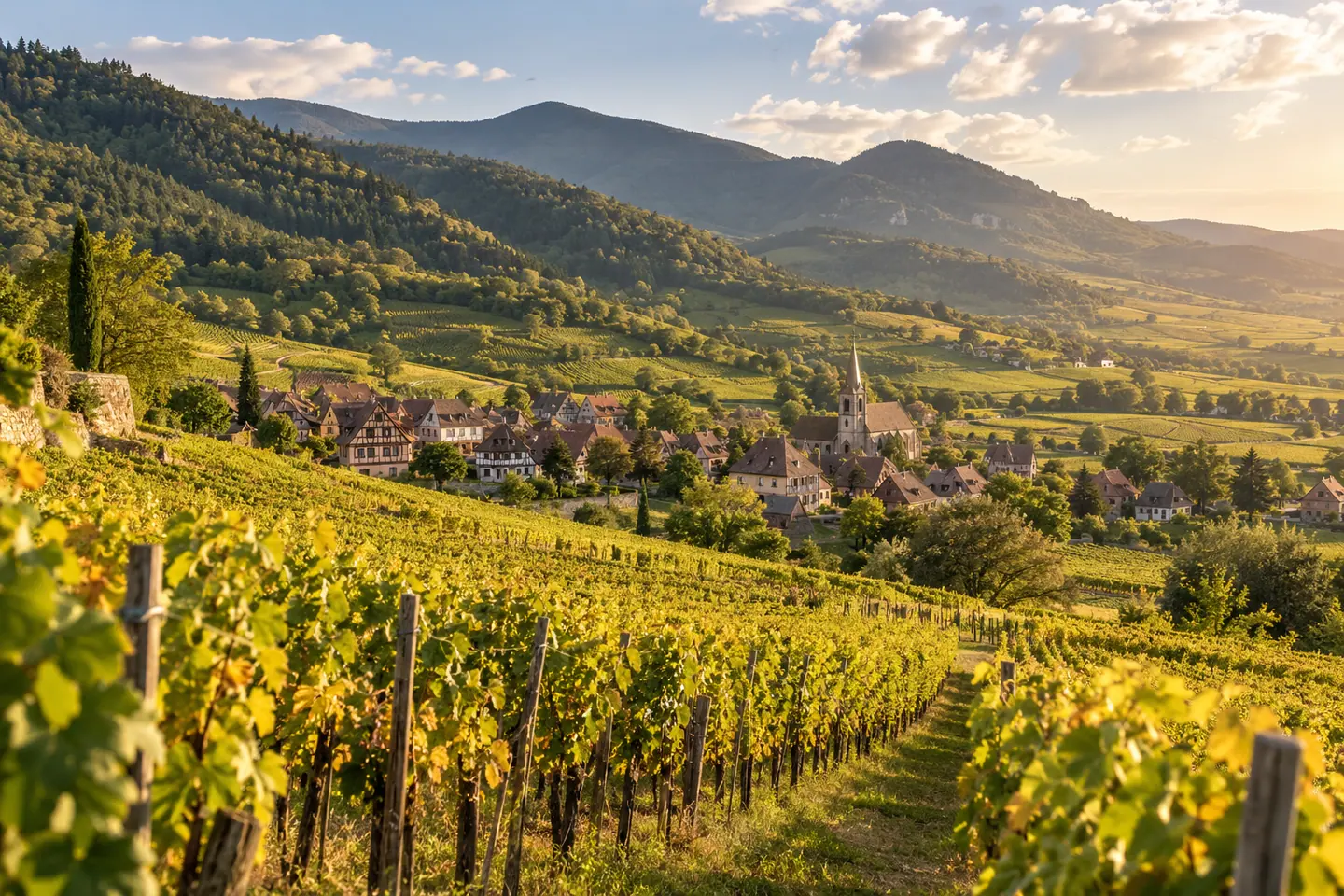
Alsace
Dry Riesling combines aroma and tension; Pinot Noir offers another view.
Terroirs, appellations and label clues
The three key appellations are Alsace, Alsace Grand Cru and Crémant d’Alsace. Grapes often feature on labels, but Gewurztraminer or Pinot Gris does not automatically mean sweet. Check sweetness; reds mainly use Pinot Noir.
To get started
Compare the precision of a dry Riesling with Pinot Noir fruit to discover two sides of the region.
Key grapes
Riesling — Citrus, precision and vivid acidity. Do not infer sweetness from the grape name alone: check the style and taste the balance between any sugar and acidity.
Pinot Noir — Finesse, red fruit and a clear sense of place. Serve it slightly cool and watch its perfume open in the glass; too much warmth accentuates alcohol.
Gewurztraminer — A white grape with an intense aromatic expression in Alsace. Taste before choosing the dish. Record perfume and sweetness separately, then adjust to the recipe and sauce.
Pinot Gris — In Alsace, full and structured white wines. Compare two producers with the same sweetness indication to better isolate differences in texture and intensity.
Compare regions
Compare regions in the same country too: the same grape can produce different wines as climate, site and producer choices change.
Style descriptions are guides, not rules: vintage, vineyard, blending and maturation change the result.