Napa Valley
Ripe fruit, polished tannins and ageing potential shape many of its leading reds.
Terroirs, appellations and label clues
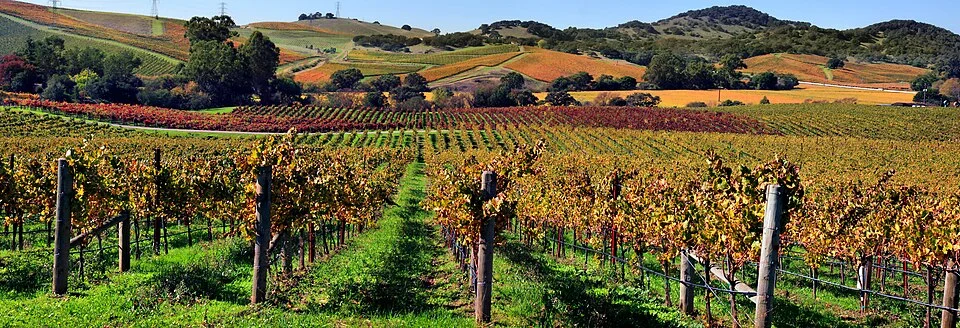
Napa Valley is a Californian AVA with smaller AVAs such as Oakville and Rutherford. An AVA locates grapes; it does not rank quality or require one grape. Compare the same variety and year before judging a subregion.
To get started
Compare Cabernet Sauvignon from two producers before drawing conclusions about the valley’s style.
Key grapes
Cabernet Sauvignon: Structure, blackcurrant and ageing potential. Compare a young Cabernet with a mature one: tannins soften while fruit aromas can evolve.
Compare regions
Napa Valley AVA. Under the federal rule, at least 85% of a wine labelled with an AVA name comes from grapes grown in that area. When comparing two Cabernet Sauvignons, record the AVA and grape variety separately. Oakville identifies a more specific origin within Napa Valley. TTB · Appellations of origin ↗.
Style descriptions are guides, not rules: vintage, vineyard, blending and maturation change the result.
Two routes to understand styles
Oakville Cabernet Sauvignon
Napa Valley Cabernet Sauvignon
A more precise AVA describes origin without guaranteeing preference. Record blends and maturation; a visited winery does not define every origin used by the producer.