Old World, New World
A useful historical distinction best used flexibly amid the diversity of wine.
Old World usually refers to European countries with long winegrowing histories.
New World commonly includes the Americas, Australia, New Zealand and South Africa.
Today growers on every continent experiment. Place, grape and winemaking choices often tell you more than this label.
These geographic categories simplify a great deal: check precise origin, producer and vintage before predicting style. Two wines from one country may differ more than wines from different continents.
OIV: Wine origin and labelling ↗
Put the guide into practice
Treat these expressions as broad geographical shorthand, not a way to predict every bottle. Compare specific places, producers and vintages. Climate, grape and production choices can matter more to your selection than the continent on the label.
An exercise for comparison
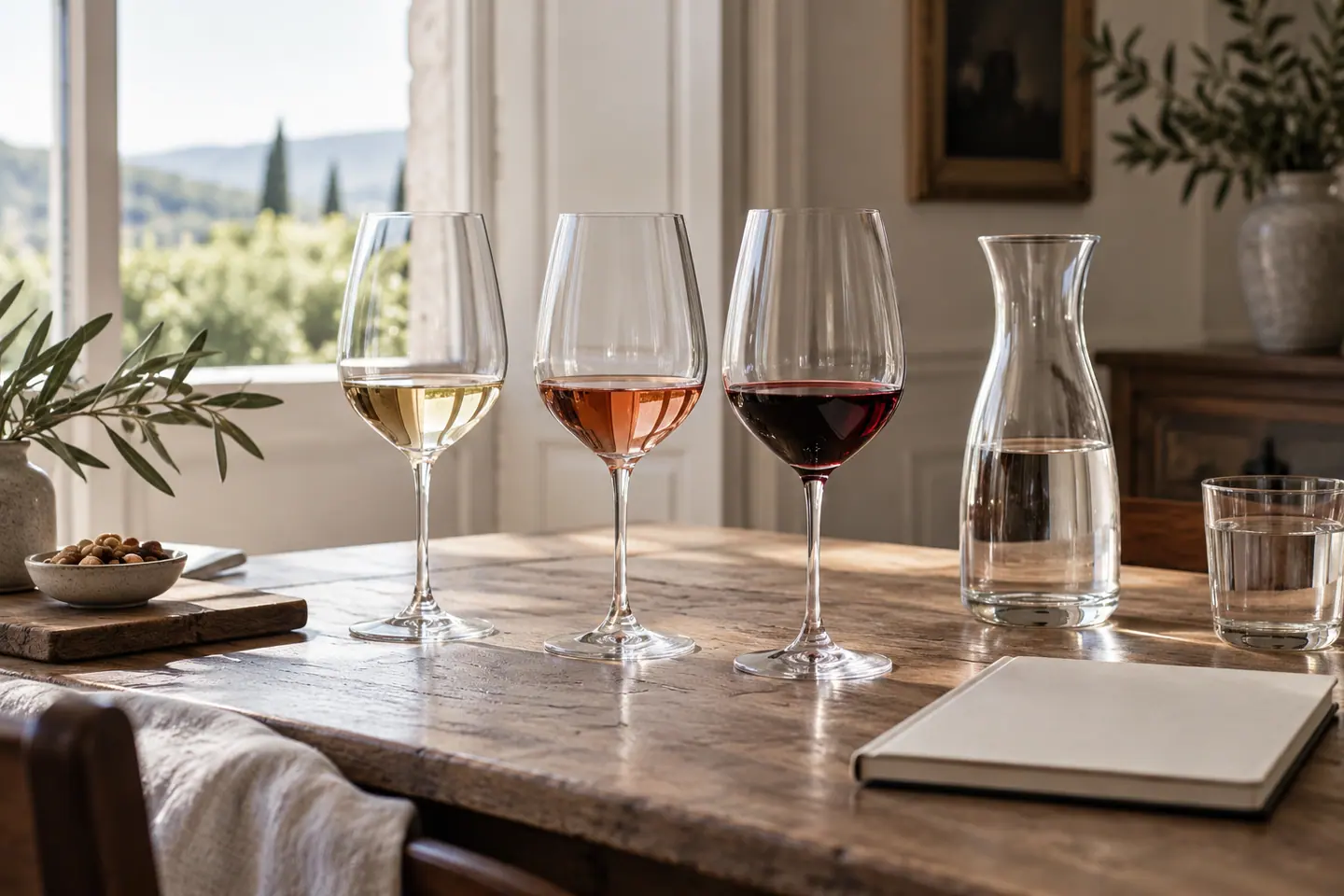
Choose the same grape from two origins and keep glass and service conditions similar. Write observations before revealing price or reputation. Describe the pair you tasted; do not turn it into a verdict about all European or overseas wines.