Santorini
Distinguish dry whites from Vinsanto-style sweet wines.
Terroirs, appellations and label clues
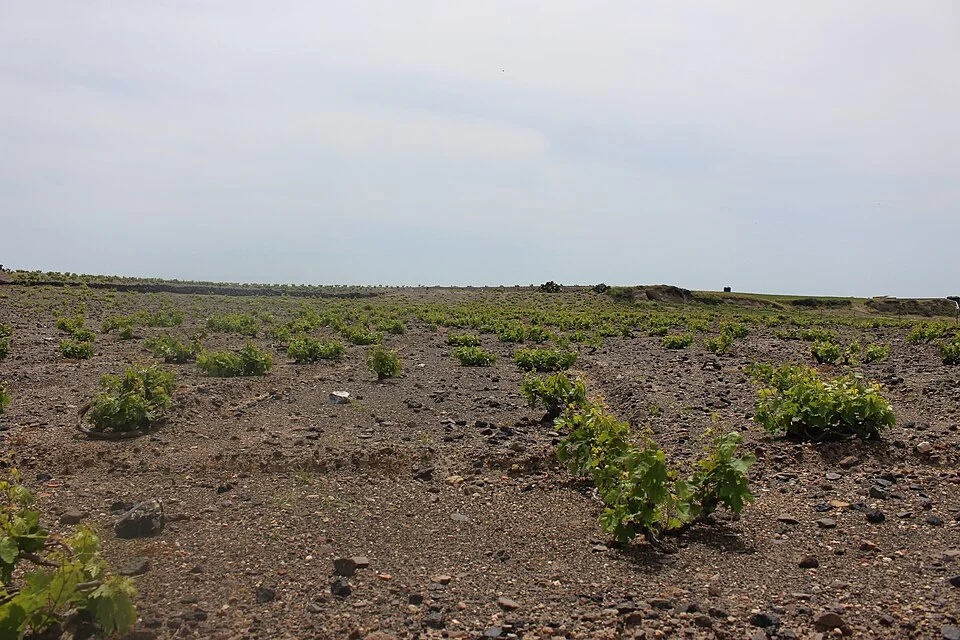
Assyrtiko makes dry whites and features in Vinsanto, a sweet dried-grape wine. Traditional kouloura training forms a low basket protecting grapes from wind. Distinguish Santorini Vinsanto from Italian Vin Santo.
To get started
Start with a dry Assyrtiko. Compare another bottling at similar vintage and temperature, noting texture.
Key grapes
Assyrtiko: A Greek white grape associated with Santorini. Compare an unoaked bottling and a barrel-aged one; record texture and acidity before aromas.
Compare regions
Compare regions in the same country too: the same grape can produce different wines as climate, site and producer choices change.
Style descriptions are guides, not rules: vintage, vineyard, blending and maturation change the result.
Two routes to understand styles
Santorini Assyrtiko dry
Vinsanto
Two wine families need separate serving contexts. To compare place, choose two dry Assyrtikos with documented maturation; Vinsanto introduces a different sweetness question.
Assyrtiko in two styles of Santorini PDO
The EU document published in 2022 sets a minimum of 85% Assyrtiko for dry white Santorini PDO. Vinsanto is a sweet style made from dried grapes, subject to a different composition rule. Identify the style on the label, then check the producer’s sheet for the exact blend. Official Journal of the EU: Santorini PDO specification.