Discovering fortified wines
Port and other styles: understand added spirit and choose by sweetness.
A fortified wine receives grape spirit during or after fermentation. The timing of that addition helps shape its style.
Port comes from the Douro, but not every fortified wine is Port, nor do all taste alike. Check origin and style on the label.
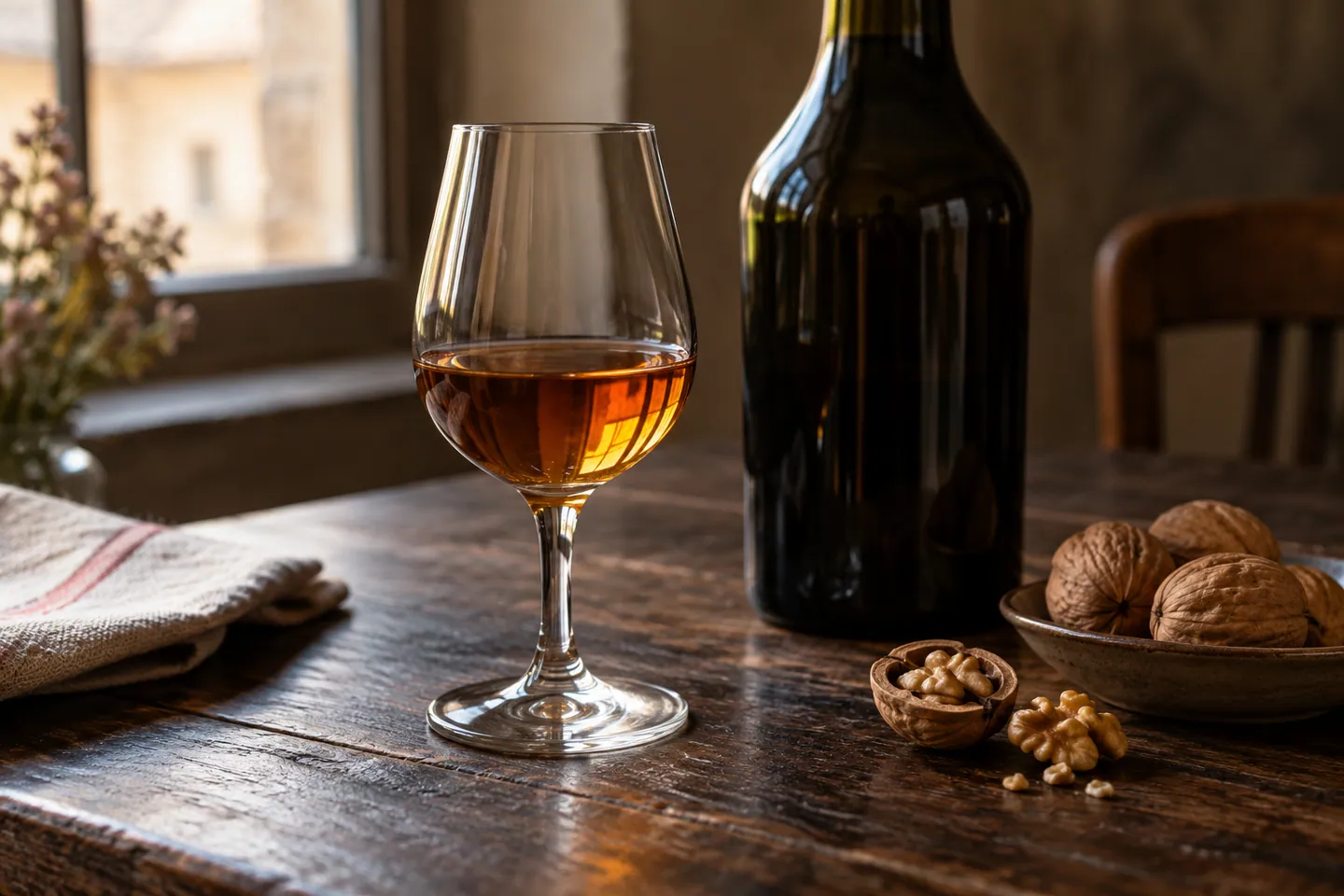
With dessert, compare its sweetness with the wine’s; a less sweet wine may seem harsh. Pour a small serving to appreciate its concentration.
Adding spirit often stops fermentation, but fortified wines are not all alike. Check when spirit was added, remaining sugar and maturation before serving or pairing.
Explore next
WSET: Wine structure and production ↗
Put the guide into practice
Before comparing fortified wines, identify the named style and its sweetness rather than relying on alcohol strength. A dry fortified wine and a sweet one answer different food and service needs. Check the producer’s guidance for the exact bottle.
An exercise for comparison
Build a comparison card with origin, style, sweetness information, ageing method and opening date. Unknown details stay unknown. Compare aroma and texture in small pours, and keep the storage instructions separate from your personal preference.