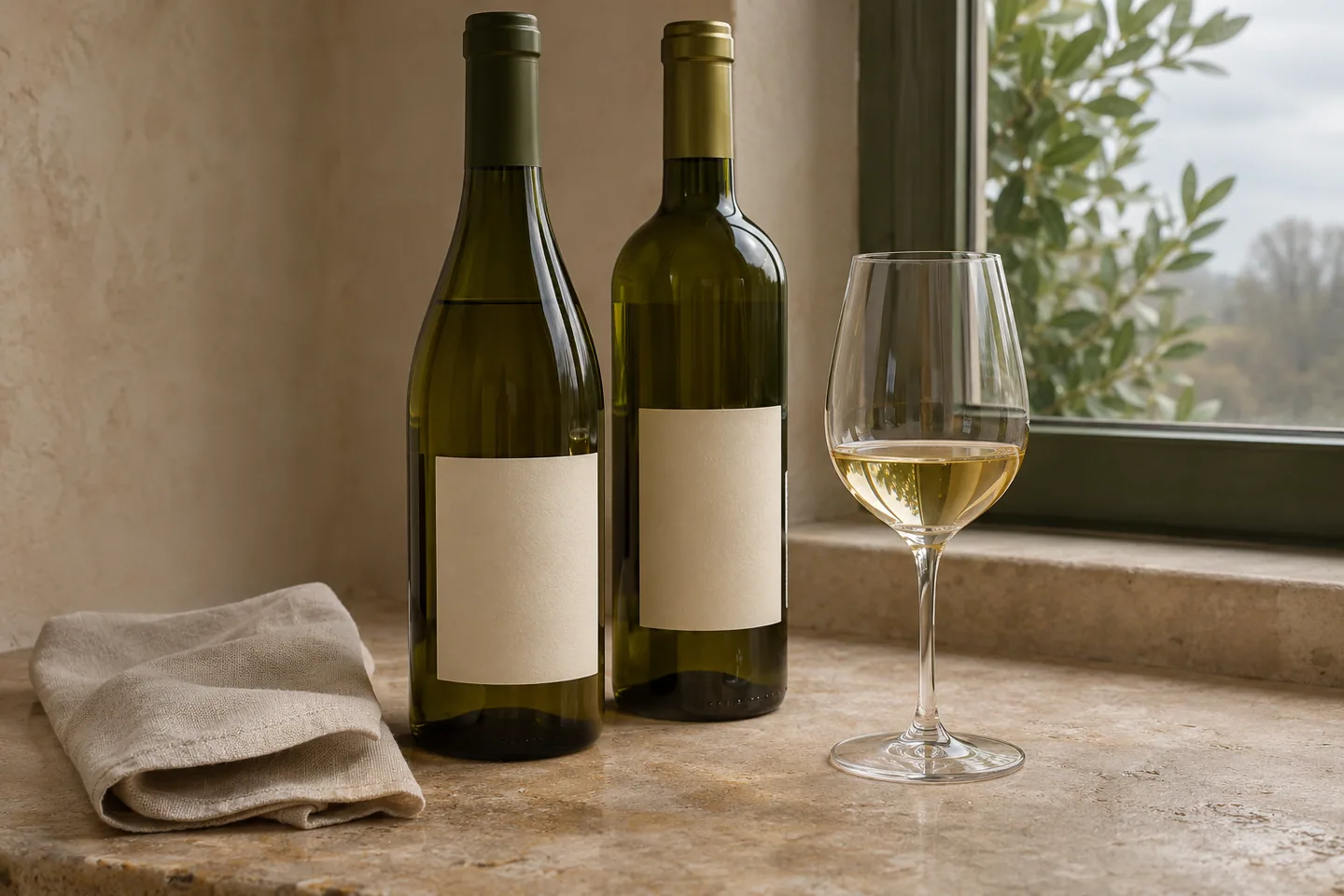
Dealcoholised wine starts out as wine. A subsequent treatment removes some or nearly all of its alcohol. Grape juice and other grape-based drinks can look similar on the shelf. Check the product name on the back label to tell them apart.
Reading a label in 2026
Under the EU rules in use before the transition, dealcoholised wines have an actual alcoholic strength of 0.5% by volume or lower. Partially dealcoholised wines are above 0.5% and below the pre-treatment minimum for their category. Other wording may appear alongside the product name, so check the figure in % vol.
What changes on 19 September 2027
For the wine categories covered after dealcoholisation, the new EU text uses “alcohol-free” at up to 0.5% by volume and adds “0.0%” at up to 0.05% by volume. “Reduced-alcohol” applies above 0.5% when the strength is at least 30% below the category minimum before treatment. Bottles labelled in line with the previous rules before that date may remain on sale until stocks run out.
Comparing two bottles
Start with the product name and the figure in % vol. Look up sugars per 100 ml in the nutrition declaration, on the label or via its link. Compare like with like, starting with still or sparkling, and check the producer’s storage instructions. The EU requires a date of minimum durability for treated wines below 10% alcohol by volume.
A worked example
Two dealcoholised sparkling wines may carry similar alcohol wording while listing 4 g and 2 g of sugars per 100 ml. In a 150 ml serving, that works out to 6 g and 3 g respectively. These figures are fictional and illustrate how to compare two labels.
Sources and review date
- Regulation (EU) 2026/471, Articles 1, 5 and 6
- Corrigendum of 22 May 2026
- Regulation (EU) 2021/2117 · rules before the transition
- DGCCRF · French guidance on dealcoholisation
Sources checked on .