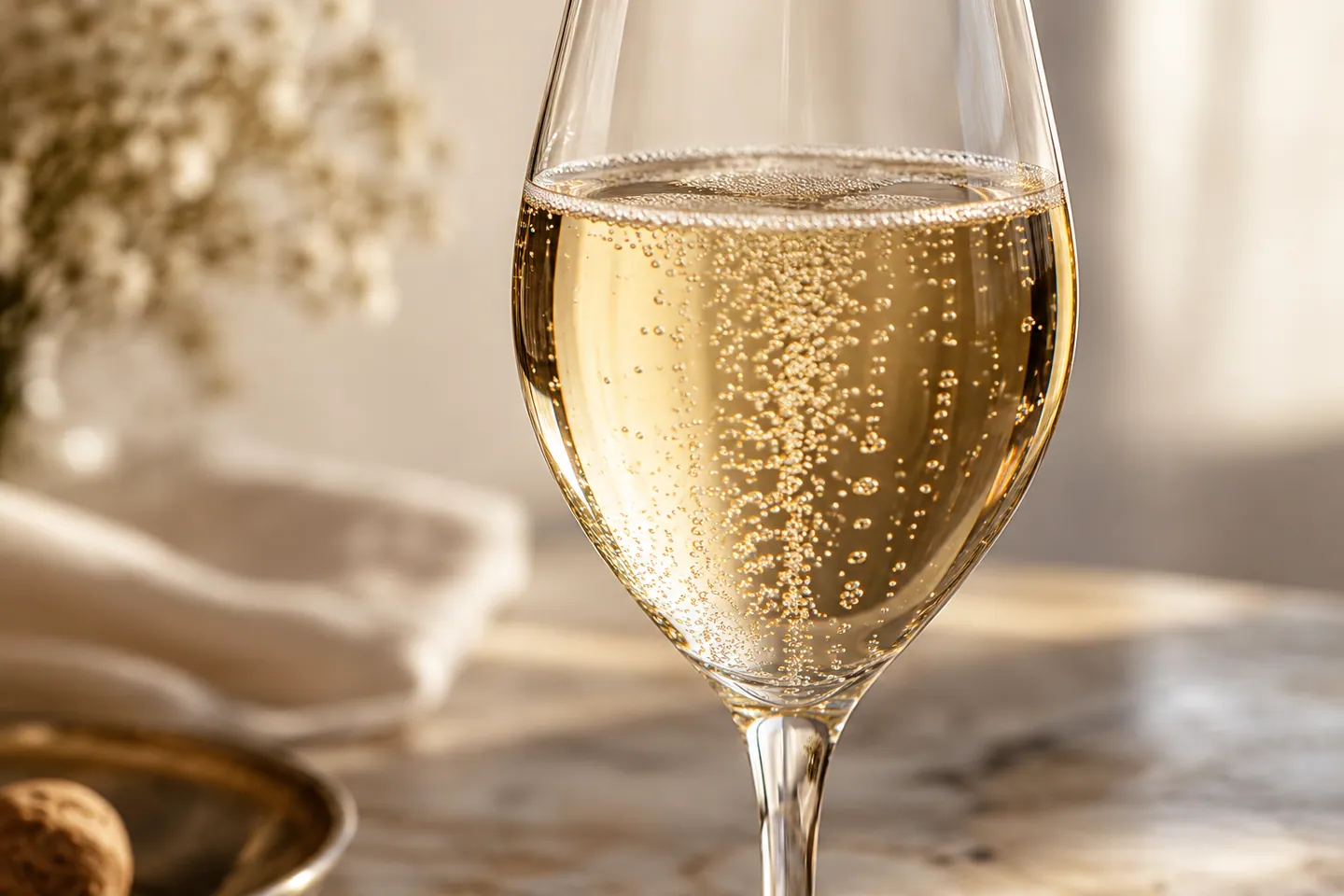
AI-generated photographic illustration for « Understanding sparkling wine ». Fictional scene; does not depict a real establishment or identify a grape variety.
Learn · 1 min read

Understanding sparkling wine

Bubbles, methods and styles: a clear tour of wines for celebration and the table.

Learn

Understanding sparkling wine

Bubbles, methods and styles: a clear tour of wines for celebration and the table.

01

Bubbles come from fermentation that traps carbon dioxide in the wine.

02

Bottle and tank fermentation create different textures and profiles; method alone does not define quality.

03

From brut nature to demi-sec, sweetness terms help you choose a style for the occasion.

04

Bubbles alone do not reveal sweetness. Check dosage, then compare bubble texture, acidity and any aromas from lees ageing.
Sugar in Champagne (g/L)

Sugar in Champagne (g/L)
Termg/L
Brut nature< 3
Extra brut0–6
Brut< 12
Extra dry12–17
Sec17–32
Demi-sec32–50
Doux> 50

Brut nature also means no sugar added after the second fermentation. Categories overlap; read the label in its Champagne context.

Comité Champagne — Dosage ↗

Frequently asked questions

Is extra-dry drier than brut?

No, for Champagne categories: extra-dry is 12–17 g/L sugar, brut under 12 g/L. Read terms in their wine category, not literally.

About the images

Illustrative images are AI-generated for FRANCE VINS. Landscapes evoke wine regions; grape images illustrate grapes without identifying a variety.