Orange wine: understanding skin-contact whites
A winemaking method with varied textures and adaptable pairings.
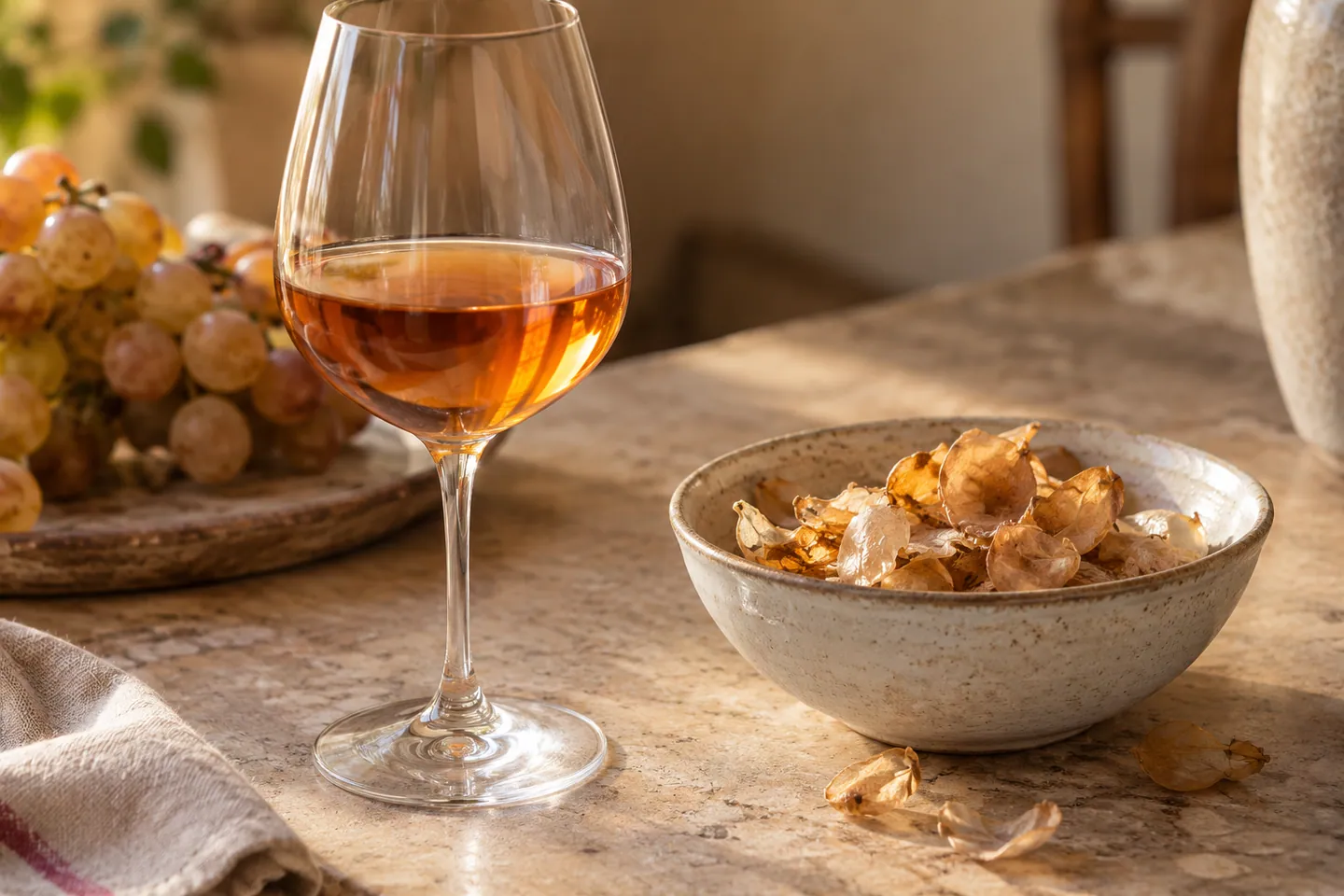
Orange wine is white wine made with grape-skin contact. Maceration adds colour and can extract tannins. It is not orange-flavoured wine or rosé from black grapes.
Contact duration, grape and vessel change the result; an amphora is not required. Orange, organic, natural and no added sulfites describe different aspects and do not automatically imply each other.
Assess aroma, acidity, tannins and sweetness separately. Amber colour can accompany dry wine. Styles range from delicate to firm or oxidative: use the producer’s sheet, not colour alone.
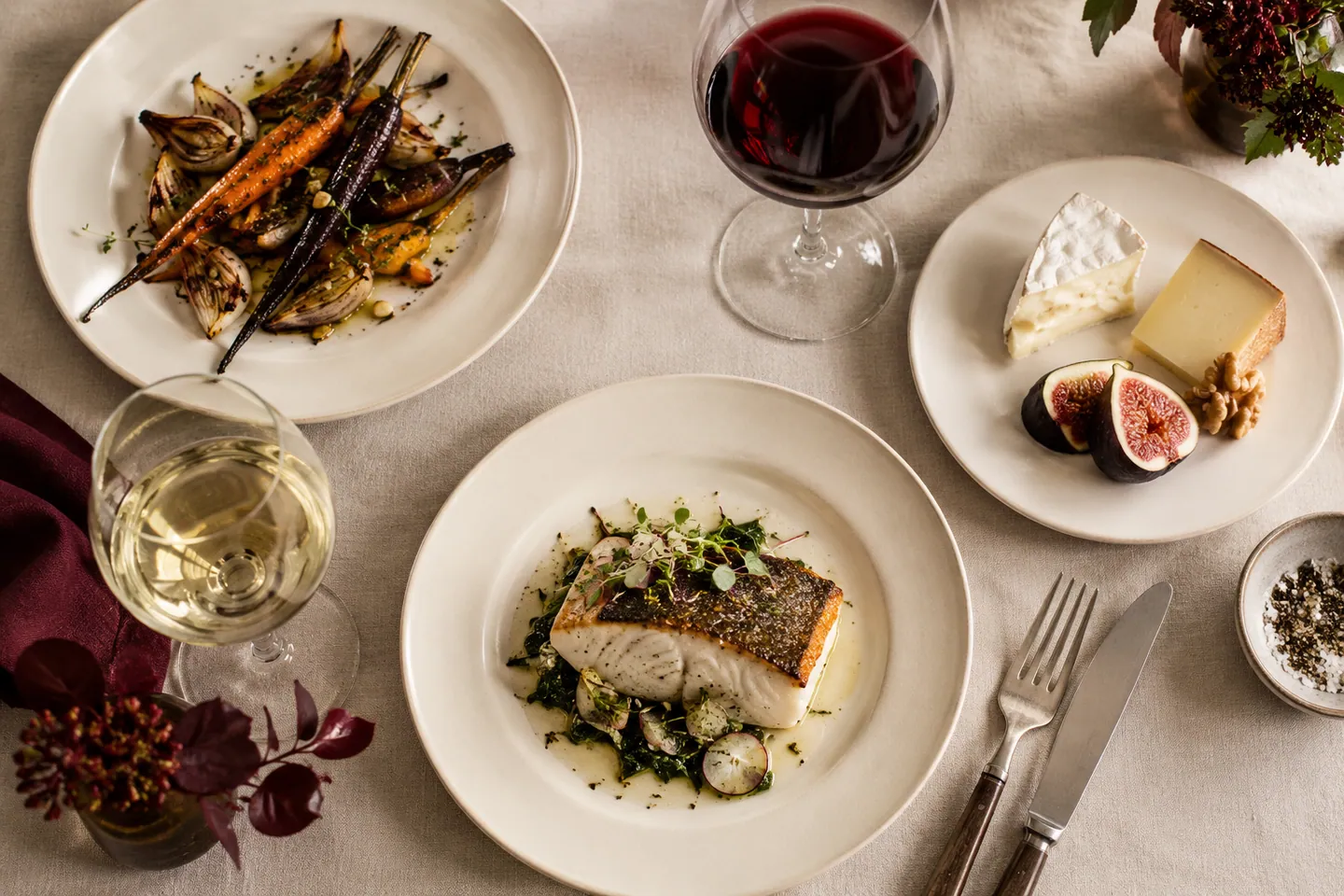
Try roasted vegetables or lightly seasoned mushrooms. Taste a plain bite, then sauce, and observe bitterness. Compare two whites of the same grape, with and without extended skin contact.
Explore next
WSET: Skin-contact white wines ↗
Put the guide into practice
For a skin-contact white, ask which grape was used and how the producer describes maceration and maturation. Do not infer sweetness, natural-wine status or the absence of sulphites from the orange colour. Colour is a starting observation, not a complete specification.
An exercise for comparison
Compare texture and aroma with a white made from the same grape if available. Keep vintage and service conditions close. Record drying sensation separately from freshness, and acknowledge that differences in producer or ageing limit the comparison.