When should you decant wine?
Aerating a young wine and separating old sediment serve different purposes.
Taste first: an open wine may need nothing.
A tight young red may open with air; check it as it changes.
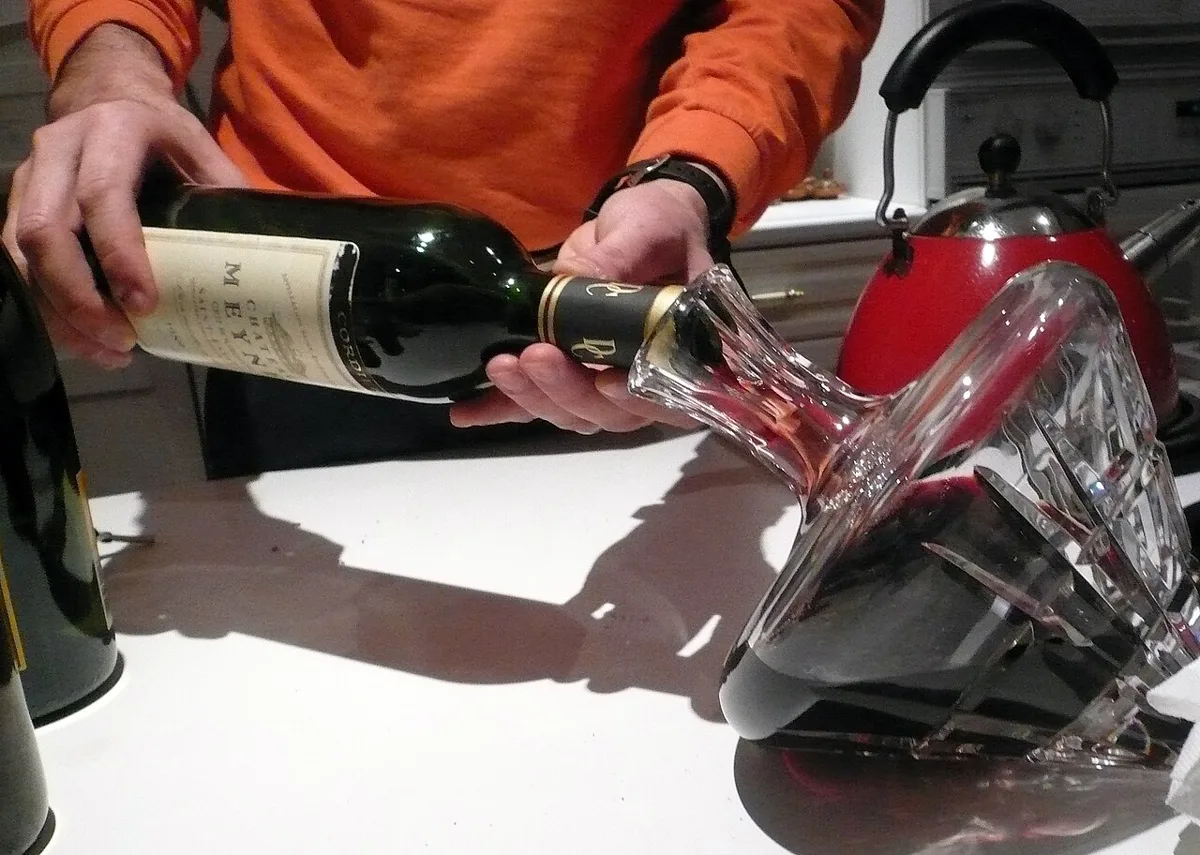
For an older wine with sediment, pour slowly and stop before sediment reaches the neck.
A decanter can separate sediment or add air; these are different aims. For a fragile wine, pour gently and taste regularly: long aeration is not always helpful.
Explore next
Wine & Spirit Education Trust: Serving and decanting ↗
Put the guide into practice
First decide what you want to do: separate sediment or expose the wine to air. These aims require different attention. Do not assume every old bottle benefits from prolonged aeration; a fragile wine can change quickly.
An exercise for comparison
Compare a small pour before and after a gentle transfer. Keep temperature and glass shape similar, and stop when the wine suits you. Sediment alone is not a tasting fault or a reason to discard the entire bottle.